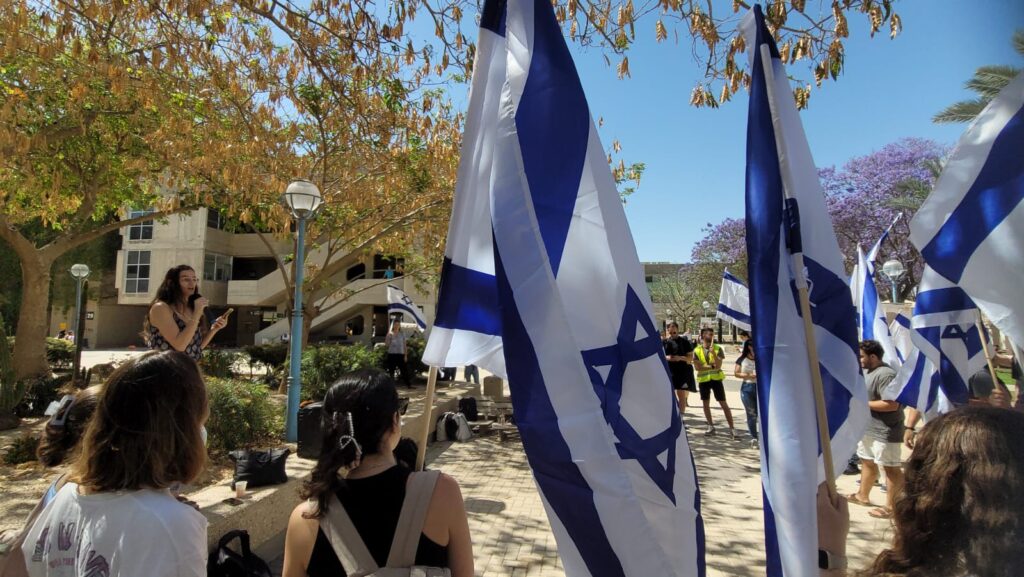
Student activism on university campuses often presents itself as part of a broader global struggle for human rights and liberation. Students organize campaigns and protests under the belief that they are standing on the side of justice. Universities themselves have also long been spaces where political movements grow, and where students engage with wider global issues.
But if campus activism is truly rooted in the goal of human rights, it is worth asking why some movements receive enormous attention while others receive little to none.
Activist movements often present themselves as universal movements for justice, but in practice they are shaped by ideology and institutional campaigns. This does not necessarily invalidate these movements, but it does challenge the idea that campus activism is merely a neutral response to injustice.
An example of this contrast can be seen through the differences between campus mobilization around Gaza, and the relative absence of sustained activism in support of issues like the situation in places like Sudan — and also in Iran, including supporting Iranian students who actively protest their own government.
At the University of East Anglia (UEA), as at campuses across the UK, the past number of years has brought visible and sustained pro-Palestine organizing with protests, encampments, and marches of more than 400 students calling for divestment. It also involves motions brought before the Students’ Union resulting in a longstanding institutional boycott policy against Israel.
Over the same period, Iranian students and civilians have protested against the political repression and government-sponsored violence in Iran, most noticeably during the “Women, Life, Freedom” movement. This past January, it’s reported that tens of thousands of innocent protestors were murdered by the regime, and many more were jailed.
Yet at UEA, as at most British universities, this did not translate into encampments, sustained protest weeks, or motions to the Students’ Union. The same is true for many other conflict areas around the world — and the contrast is difficult to ignore.
The point here is not that students should protest every global issue equally. That would be unrealistic. Student movements naturally focus on certain causes more than others. But this contrast does raise an important question: what determines which global issues become campus movements and which do not?
I believe part of the answer lies in activist infrastructure. Some causes already have established student organizations and national campaigns with clear institutional mechanisms. At UEA, campaigns related to Palestine, for example, often involve established movements such as Boycott, Divestment and Sanctions (BDS), which provide students with clear actions to take, such as lobbying student government and hosting annual protest weeks where official language is promoted. There are funding networks and experienced organizers behind the scenes who help translate political concerns into sustained campus activism.
By contrast, Iranian dissident movements do not have the same level of organized support. There are fewer established student campaigns, fewer institutional demands directed at universities and fewer organized networks translating concern into campus activism. A student at UEA who wanted to organize meaningfully around Iran would find considerably less infrastructure available to them than one organizing around the Israel-Palestinian conflict.
Another factor may be related to how students interpret global politics more broadly. On many campuses, political activism tends to be framed through narrow ideas like decolonial theory and the history of Western imperialism. Within this framework student activists tend to focus on issues where Western powers are seen as solely responsible for global injustice. Whether this is introduced or sustained in classrooms or in college group meetings is a subject for another piece, but in this context it doesn’t really matter.
What this contrast suggests is that campus activism is not guided by moral principles alone, but is instead shaped in large part by the existing political frameworks.
Recognizing this does not require assuming bad intentions on the part of student activists. Many student movements are motivated by genuine concern. But like all political movements, individuals must be wary of manipulation and groupthink.
Individual action and anger become tools for someone else’s ideas, so it’s important that we are all responsible with what we choose to put our energy towards. If campus activists at UEA claim to stand for universal human rights, then they must also be willing to ask the difficult question of why some struggles seem more important than others.
This article was originally published in The Algemeiner. Opinions expressed are those of the author and do not necessarily reflect those of CAMERA.