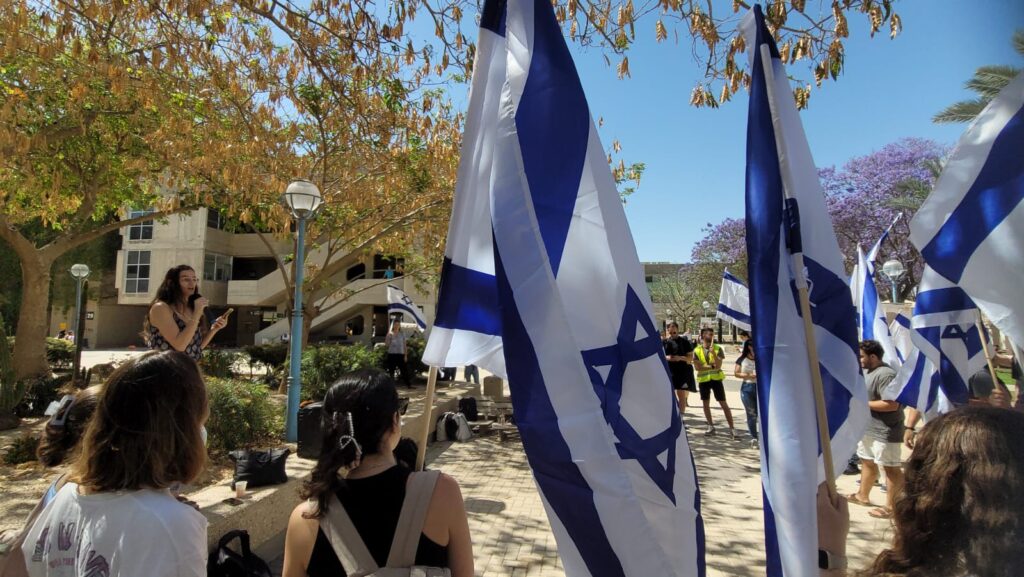
Universities are meant to be spaces for open debate, where students engage with a diverse range of political and social issues. At the same time, student politics is expected to reflect the priorities of the whole student body. In practice, however, there is an observable gap at many universities between what students say matter most to them – the quality of teaching, housing and cost of living – and what the elected officials have continued to prioritise. Despite this, the Israel-Palestine conflict has taken a disproportionately prominent role within student politics, often overshadowing basic student life issues.
For most students, these day-to-day concerns are not abstract questions but immediate realities that shape their university experience. Instead, the Students’ Union at LSE has passed four BDS and other related resolutions in the past year. Meanwhile, issues surrounding the cost of living, quality of education, student safety and protecting free speech have been given little attention in contrast.
To take just one example, LSE’s recent Students’ Union sabbatical officer elections also highlight this. These elections decide the people who are elected to represent student interests to university management and lead campaigns on behalf of the student body. One candidate aiming to be General Secretary placed a position of divestment from Israel at the heart of his campaign and said he would “immediately implement Boycott, Divestment and Sanctions (BDS) within the SU”. During his campaign, the candidate plastered one of the university buildings with posters displaying the same message.
For those unaware, the BDS movement is deeply antisemitic due to its double standards, demonisation and delegitimisation aimed at the State of Israel.
This isn’t an isolated incident, as many other candidates expressed similar positions in their manifestos. Another candidate aiming to be Welfare Officer described themself as “anti-Zionist” as one of their defining traits. For this to be one of their defining characteristics, and the only one referring to any personal beliefs, again highlights the extent to which positions on a conflict thousands of miles away can take precedence over issues that the vast majority of students truly care about.
I had previously contacted LSESU’s General Secretary and many other senior staff members to raise these concerns. I was ignored.
LSESU is not alone in this unmitigated anti-Zionist bias. Recently, when students at Royal Holloway University of London (RHUL) wanted to set up an Israel Society to combat the flagrant misinformation surrounding Israel on their campus, the already established Palestine Society coordinated a group of students to run in the SU elections with the sole intention of voting against their ratification. While initially succeeding, the board of trustees overturned the decision given its discriminatory nature.
These two examples are just a drop in the ocean.
The prominence of the Israel-Palestine conflict within student politics raises pressing and worrying questions regarding representation, prioritisation, and neutrality. Universities are places where difficult and often controversial global issues should and must be discussed. However, this open and free discourse should not be to the detriment of addressing everyday concerns and issues that directly shape the lives of students across campuses such as housing, teaching and the cost of living.
When a small number of highly charged geopolitical issues dominate discussions around elections and union activities, there is a risk that the wider student body feel forgotten and therefore they disengage from student politics altogether, feeling that their needs are being overlooked. Global issues, that a minority of students are affected by and therefore care about, should exist alongside these more pressing issues rather than replacing them.
The challenge for Student Unions is to ensure they remain genuinely representative, reflecting all concerns of their members in proportion. A more balanced agenda would not diminish the importance of other issues such as political expression but would, in fact, strengthen trust in student democracy by ensuring it remains rooted in the experience of all students and ensure they feel able to speak up about what truly matters to them rather than being silenced by an issue thousands of miles away.
This article was originally published in the Times of Israel Blogs. Opinions expressed are those of the author and do not necessarily reflect those of CAMERA