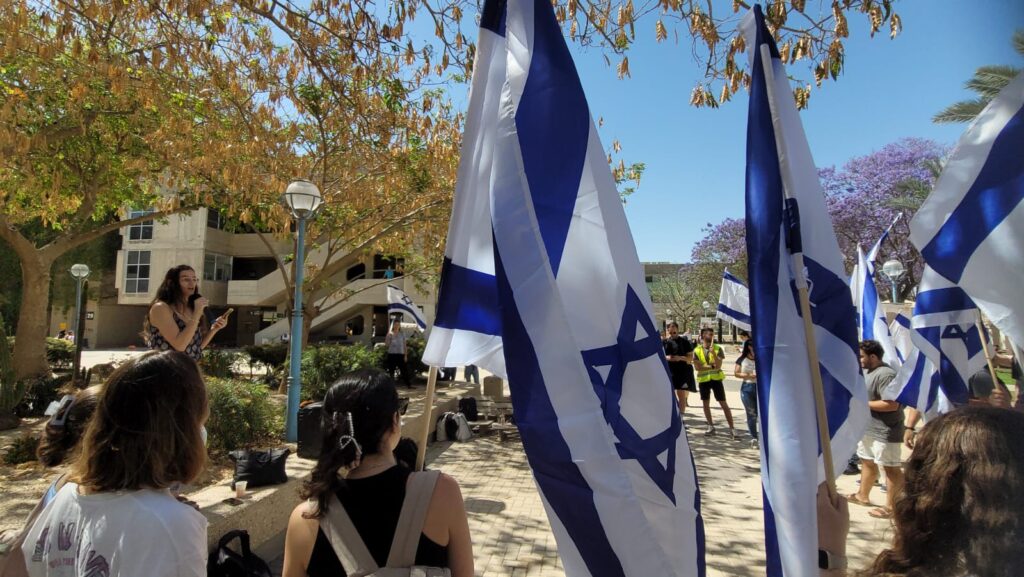
Late last month, Pennsylvania U.S. Senators John Fetterman (D) and David McCormick (R) released joint letters addressed to the presidents of five large universities within the Commonwealth of Pennsylvania; Lehigh University, Penn State University, University of Pennsylvania, University of Pittsburgh and Temple University. Together, the Senators urged the universities to ensure the safety of all Jewish students and campus organisations, stating that “Every student deserves a safe and enriching college experience.” Since the Oct. 7, 2023 Hamas attacks on Israel, a stark rise in antisemitism has been seen both on and off college campuses, and as those five are the universities with the largest Jewish student populations within the state, there have been concerns regarding heightened anti-Jewish rhetoric and violence.
Nationwide, antisemitic assaults, harassment and vandalism stands at a 344% increase over the past five years, and in 2024-2025, antisemitism on American university campuses reached an all-time high with Hillel International recording 2,334 total incidents, up from the 1,853 recorded in 2023-2024 and 289 incidents in 2021-2022. Including vandalism and theft, Holocaust inversion and physical violence, Jewish students — no matter their personal religious denomination or national identity — have been pushed out of campus spaces and isolated, yet at the same time placed at center stage, tokenised by the political left and right for wider national and international issues. In a 2025 survey conducted by the Anti-Defamation League (ADL), Hillel International and College Pulse, 83% of Jewish university students reported experiencing some form of antisemitism on their campuses, with more than a quarter reporting the incident involving faculty. In a nation where the rights to freedom of speech and religion are highly valued, alongside the fact that university campuses have typically provided opportunities for young adults to explore the cultures and identities of both themselves and others, a reported 41% of Jewish students feel the need to hide their identity, highlighting the prevalence of this problem.
The issue is further exacerbated when considering the role of faculty and staff who inflame antisemitism rather than fighting it, with a recorded 73.2% of American-based university faculty members reporting having observed anti-Jewish actions or comments come directly from campus faculty, staff and administrators.
As a Jewish university student in these times, I myself have tucked away my Star of David to avoid any sort of ostracisation from peers, and have stacked the mental scale of whether or not to speak up against anti-Jewish and anti-Israel comments at the risk of totally losing friendships. In a school where, out of over 17,000 students, less than 500 are Jewish, my Jewish-ness is something that the past 700 days has made me hyper-aware of. In the past half year alone, I encountered exclusion from classmates who actively avoided me and avoided discussing Israel when I was around, to being asked, “You in Palestine?” when showing friends the archaeological sites I was seeing in Jerusalem, while volunteering with local low-income communities this summer. I faced direct conflict, in which I was told my personal experiences as a Jew did not matter because of how Israel has responded to Hamas’s attack, the single deadliest day for Jews since the Holocaust. Witnessing the intensity of antisemitism that has been — and continues to be — seen on university campuses across America, having friends at various other colleges grappling with it daily, it hits close to my heart.
Too often have anti-Israel statements and claims crossed the line into antisemitism, and more, these comments are blindly accepted as fact rather than one individual’s or group’s opinion on a historically complex issue. Twisting words, definitions, and scenarios and omitting specific parts of a narrative creates dangerous conditions for minority students who bear the brunt of these preconceived notions. I have seen this here at West Chester. Having to explain to university administrators for over two years how the actions (and inactions) of faculty, staff and administrators not only perpetuate these age old ideas of Jewish blood libel and incomplete notions of the ongoing conflict, but also, not acting allows for the festering of anti-Israel and anti-Jewish beliefs on this campus.
I am grateful for Fetterman and McCormick’s call to Pennsylvania universities to protect their Jewish students. The recognition of the humanity of individual people involved seemed to have become less and less important. Remember the Jewish students at West Chester are real, living and breathing people who pass you in the hallways and stand next to you at Sykes, in the SECC, at the Rec. As the fall semester continues, I hope non-Jewish university students, faculty, staff and administrators, understand, support and are open to dialogue of the experiences and realities of their Jewish counterparts at West Chester.