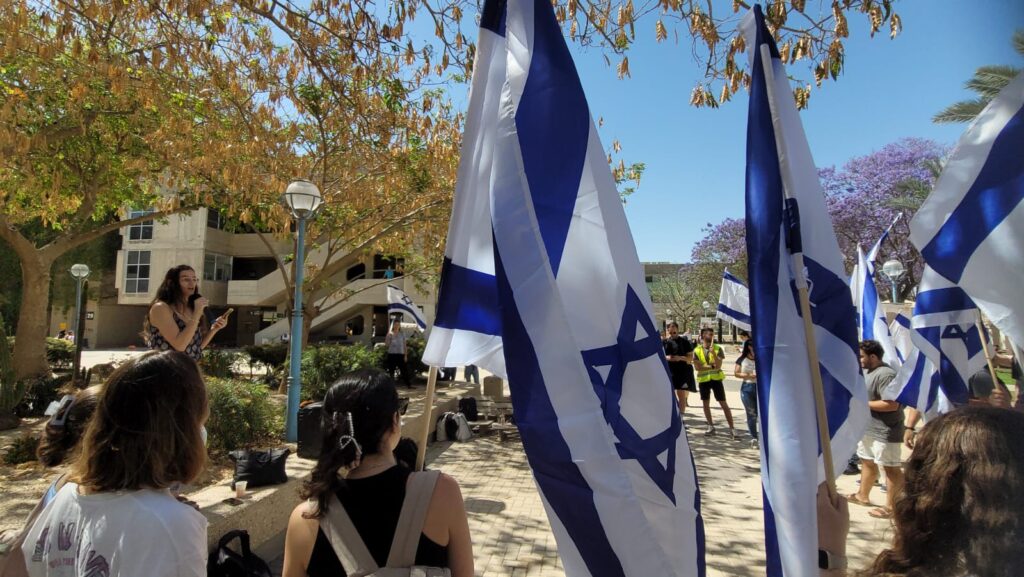
Meaningful dialogue is what allows students to engage with the world around them to the best of their ability. In my experience, staying in an echo chamber full of the same small range of perspectives negatively affects one’s ability to think critically about controversial topics like the current war with Iran.
That’s why I recently helped organize a tabling session at the University of Florida where students had the chance to have conversations with actual Iranians to hear other perspectives on the conflict that they may not have heard before. Observing these conversations made me realize that many opinions weren’t built from valid research. They were simply repetitions of unverified and untrustworthy influencer opinions.
Of the conversations I either participated in or listened to, many accused Israel of carelessly blowing up a school. Others simply believed that getting rid of the Islamic Regime that terrorized Iran didn’t have any benefits for Iranians or Americans. A majority of students did not even know about the mass Iranian protests at the beginning of the year.
Challenging these beliefs and providing more information helped spark many meaningful conversations. Not only can these claims be rebutted, but doing so in a public place helped students think more critically about the conflict. Doing so in public allowed other students to listen in and also engage in the conversation, furthering the dialogue.
Yes, the Minab School in Iran was sadly bombed and many civilians died. However, before the facts about how this happened or who perpetrated it came to light, the dominant narrative blamed Israel for the attack. Many students that spoke with us claimed that Israel had bombed the school because “that is just what they do.” Others acknowledged that it was the U.S. military who bombed the school. At the time, there were also reports of an IRGC misfire being the culprit. The fog of war and conflicting narratives makes assessments difficult and easy to be manipulated. It seems that it was common for students to just run with the information that best confirmed their pre-existing beliefs.
A common position expressed was that it was unclear what the benefit of toppling the Iranian regime might be. My peers seemed unaware that the regime has funded proxy groups like Hezbollah, Hamas, and the Houthis, all of which spread terror across the region. The regime has also been responsible for murdering Americans for decades. When a group funds terror groups and sends threats to innocent people, including Americans, they must be held accountable in order to bring security.
The threats it brings to its own people are also well-documented. Iran has revoked many women’s rights, executed political prisoners, shut down the internet, and has a history of silencing its dissenters. We saw a clear example of that earlier this year, but because the internet is shut off and people run with the narrative that best fits their bias, the world does not know very many specifics about the thousands of people who have been killed, simply for expressing their belief.
Honestly, I thought that there would be massive pushback, and people would stick with their pre-existing beliefs. Videos of people hosting similar events show how constructive dialogue can quickly turn into arguments with people not engaging. So I was pleasantly surprised that my peers engaged positively. It is through my experience that the best way to combat misinformation is through direct dialogue. College is a place to grow your mind and be challenged, not to be trapped in information silos. Students need these opportunities to engage with their peers in ways that challenge their opinions and grow their mind. College campuses are the perfect environment for this, as it is where students are preparing to challenge the world. Colleges need to provide opportunities like these to students to allow them to grow into their own people. From my experience, students are open to it, they just need the chance to do so.
This article was originally published in the Times of Israel Blogs. Opinions expressed are those of the author and do not necessarily reflect those of CAMERA.